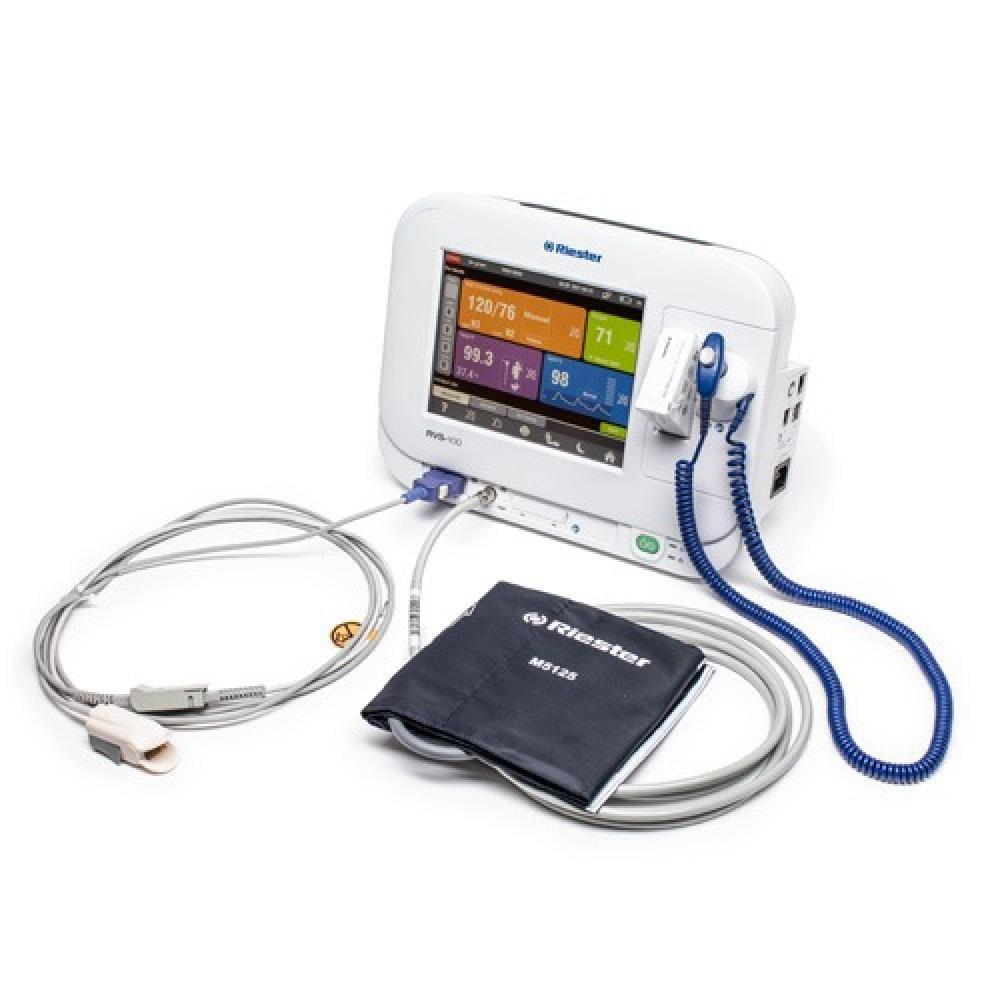
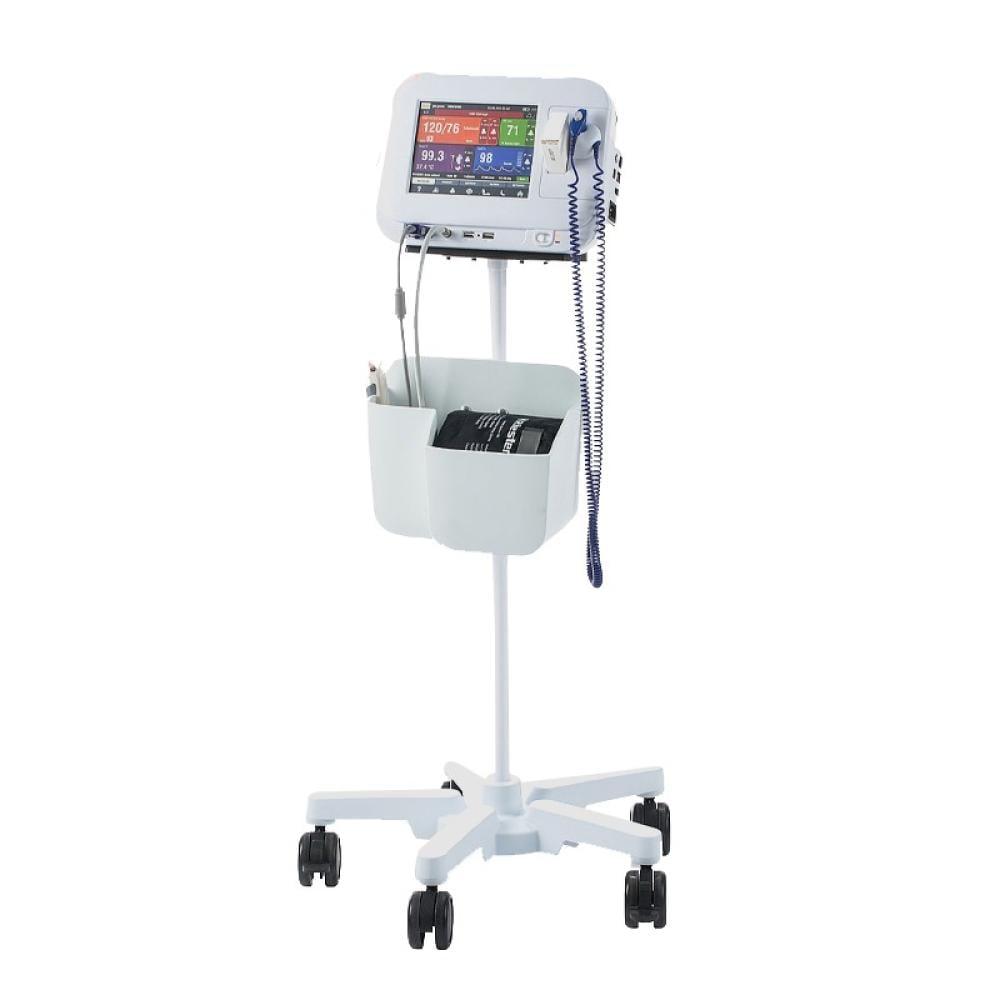
The device has "Monitor", "Spot Check" and "Triage" profile options, as well as a "Demo" mode.
Continuous monitoring is designed to monitor patients over time and includes physiological and technical alarms. Spot Check is designed to take a single set of vital sign measurements for a patient. Patient information can be entered and managed, and while technical alarms remain available, physiological alarms are disabled. Triage is designed to quickly take vital sign measurements for multiple patients. Patient information is disabled, as well as physiological alarms. A “demo” mode demonstrates how each measurement mode works.
RVS-100 Advantages
The goal of the early warning system is to improve patient outcomes by identifying at-risk patients who need urgent medical care and early intervention to prevent clinical deterioration. This system includes assigning numerical values to several physiological parameters (such as temperature, respiratory rate, and SpO2). The RVS-100 can be programmed using NEWS (National Early Warning Scores), MEWS (Modified Early Warning Scores), and also has 5 customizable profiles that can be set by the end user if they have different parameter values